“The nice thing about teamwork is that you always have others on your side.” – Margaret Carty
Family protected by their financial “bodyguards”.
The majority of how people make financial decisions both big and small is often with the best of intentions, but as most of us know, that is also where the road to hell was paved.
In the realm of personal finance, intentions without information can be dangerous. Every day, millions make financial decisions that shape their futures from picking a credit card, accepting a student loan, buying a car, or investing in a 401(k). Yet, especially within African American households, these decisions are frequently made with limited knowledge, access, or trusted advisors. Generational poverty, systemic exclusion, and inconsistent education have all contributed to a reality where financial literacy remains low, and bad financial advice can sometimes pass for tradition.
The statistics are sobering: According to a 2022 FINRA study, only 34% of African Americans could correctly answer four out of five basic financial literacy questions, compared to 55% of whites. This gap is more than academic it’s economic. Financial illiteracy compounds over time. It creates debt spirals, stifles homeownership, delays retirement planning, and weakens intergenerational wealth transfers. It also helps explain why the median Black household wealth remains only a fraction of that of white households.
So, if you’re navigating this landscape, how do you get the advice you need especially when your circle may not have the right information either?
Let’s explore how to build a financial circle of influence and more importantly, how to choose the right voices to include.
In far too many cases, personal finance education starts after the mistakes are made such as missed student loan payments, wrecked credit scores, or maxed-out credit cards. Even institutions designed to uplift like Historically Black Colleges and Universities (HBCUs) have been slow to require financial literacy as a foundational component of their curricula.
Imagine if every incoming freshman at an HBCU were required to complete a month-long intensive in budgeting, credit, and financial aid before stepping foot on campus. Not only that, but if financial education were embedded into their collegiate journey; customized to their majors, infused with real-world applications, and rooted in African American economic history and philanthropy the results could be transformative. Courses in credit management, entrepreneurship within your field, the basics of investing, and even African American economic institutions (from mutual aid societies to credit unions) could help create a generation that thinks differently and acts differently about money. Until that infrastructure exists consistently, however, students and families are often left to fend for themselves, relying on informal networks, questionable online advice, or predatory “wealth influencers.” That’s why building your own financial circle is more important than ever.
Your financial circle isn’t just about having a stock tip group chat. It’s your personal advisory board: a small group of 3 to 5 people you trust to help you make decisions ranging from the everyday to the existential.
Think of them as your informal “board of directors.” You don’t need them to be millionaires or financial advisors (though one or two wouldn’t hurt). But you do need them to be:
Financially aware: They have a basic grasp of sound financial practices.
Ethical: They’re not trying to sell you anything or exploit your trust.
Supportive: They understand your goals and will offer guidance in your best interest, not theirs.
Diverse in expertise: Ideally, each brings a different angle—entrepreneurship, investing, real estate, credit, budgeting, etc.
The value in this diversity is simple: no one person has all the answers. An investor might advise risk, while a credit specialist might urge caution. You need to weigh both perspectives to make the right decision for you.
Who Belongs in Your Circle?
There are five archetypes worth considering:
1. The Budget Master
This person might not have flashy investments or a six-figure salary, but they manage what they have with laser precision. They know how to stretch a dollar, pay off debt, and stick to a plan. They understand discipline and sacrifice—essential traits in building wealth, not just income.
Why you need them: For insight into monthly budgeting, avoiding lifestyle creep, and making responsible day-to-day decisions.
2. The Wealth Builder
This is your investor friend. Maybe they dabble in the stock market, own real estate, or have a retirement plan that’s growing nicely. They’ve made mistakes, but they’ve learned from them and they’re willing to share.
Why you need them: They help you think long-term. They understand compound interest, asset allocation, and the psychology of investing.
3. The Entrepreneur
Whether it’s a side hustle or a full-time enterprise, this person knows what it means to take calculated risks. They can offer insight into taxes, business credit, scaling a company, or diversifying income streams.
Why you need them: Because job security is not what it used to be and entrepreneurial skills are often the key to economic mobility.
4. The Credit Whisperer
This person has mastered the FICO system, understands debt instruments, and knows how to use credit to their advantage. They’re also likely well-versed in financial regulations and tools like balance transfers, refinancing, and consolidation.
Why you need them: To help you avoid common traps and use credit as a tool, not a trap.
5. The Cultural Capitalist
This person is grounded in the historical and cultural aspects of Black economic life. They can talk about Black Wall Street, the role of Black banks, and how to give back without going broke. They remind you that financial decisions aren’t just about you—they’re about us.
Why you need them: To stay grounded in your values and understand how your success contributes to a broader community legacy.
How to Choose the Right People
The first step to building a financial circle is intentionality. Here are a few principles:
1. Don’t Confuse Proximity with Expertise
Just because someone is family or close doesn’t mean they’re qualified to advise you. Seek out people who have demonstrated results such as consistent savings, strong credit, a stable business not just opinions.
2. Look Beyond Titles
A financial advisor with a fancy office isn’t necessarily better than your aunt who retired early on a teacher’s pension. The best advisors aren’t always licensed—they’re often experienced, candid, and care about your outcomes.
3. Vet for Integrity
Before you invite someone into your financial circle, ask: Are they selling me something? Are they pushing an agenda? Can I trust them to tell me the truth—even when it’s uncomfortable?
4. Value Perspective over Perfection
Your circle doesn’t have to be made up of financial rockstars. It has to be honest, dependable, and thoughtful. Sometimes the best advice comes from someone who made a mistake and is willing to share the lesson.
Here are a few places to start identifying people for your financial circle:
Community and alumni networks (especially HBCU alumni groups)
Professional associations (Black MBA, Black CPA organizations)
Libraries (many now offer financial literacy sections)
Local credit unions and Black-owned banks (many host workshops or financial education seminars)
And yes, if you can afford one, a certified financial planner (CFP) can be a game-changer. But even that relationship should be approached with due diligence and comparison—interview multiple advisors, ask for their fiduciary status, and never be afraid to walk away if the fit doesn’t feel right. Verify an individuals’s CFP certification and background at https://www.cfp.net/verify-a-cfp-professional.
Until institutions mandate courses, you’ll have to become your own professor. Here’s a four-year self-guided plan:
Year
Topics
Resources
Year 1
Budgeting & Credit Basics
Your Money or Your Life, NerdWallet, Experian Boost
Year 2
Investing 101
The Simple Path to Wealth, Morningstar, Robinhood Learn, Bogleheads
Year 3
Entrepreneurship
The Lean Startup, SBA.gov, Score Mentors
Year 4
Philanthropy & Estate Planning
Decolonizing Wealth by Edgar Villanueva, NAACP Legacy Programs
Add to that regular podcasts (The Economist, Financial Times), YouTube channels (like Minority Mindset), and community financial challenges (like savings goals, no-spend months, or stock clubs), and you’ll be ahead of the curve.
There’s a subtle but powerful difference between advice and empowerment. Advice tells you what to do. Empowerment teaches you how to think.
Your financial circle should do both but lean into the latter. The best financial guidance is that which helps you ask better questions, weigh competing options, and make decisions aligned with your values and goals.
Ultimately, the journey to financial health isn’t just about tools, apps, or strategies—it’s about relationships. And the most important one is the one you build with your future self.
So, who helps you with personal finance decisions? The better question might be: Who will you invite to help you get where you want to go?
“Change will not come if we wait for some other person or some other time. We are the ones we’ve been waiting for. We are the change that we seek.” – Barack Obama
It almost seems like an absurd question to ask, but…
in 2025, the idea that Historically Black Colleges and Universities (HBCUs) are no longer focused on recruiting African American students is not as far-fetched as it sounds. It’s a question whispered in alumni boardrooms, discussed in quiet conversations among concerned parents, and pondered in the minds of young Black students as they decide where to apply. While HBCUs remain vital institutions for the Black community, the numbers and decisions behind closed doors suggest that a shift is underway—one that demands scrutiny, reflection, and action.
In the decades since desegregation opened the doors of Predominantly White Institutions (PWIs) to Black students, the role and mission of HBCUs have been evolving. According to data from the Pew Research Center, Black student enrollment at HBCUs increased by just 15% from 1976 to 2022. Meanwhile, enrollment of students from other racial and ethnic groups rose by a staggering 117% during the same period. In 1976, Black students made up 85% of HBCU enrollment. By 2022, that number had dropped to 76%. That means nearly one in four HBCU students today is not Black. At at least five HBCUs, such as Bluefield State University, Lincoln University (MO), and West Virginia State University, White students now comprise the majority. While some view this as a testament to progress and inclusion, others see it as a troubling signal that the core mission of HBCUs, educating and empowering African American students, their families, and ultimately the social, economic, and political interest of African America, may be slipping.
Nowhere is this shift more alarming than in the enrollment of Black male students. In 1976, Black men made up 38% of students at HBCUs. By 2022, that number had fallen to just 26%. The decline is not only concerning it is an existential threat to the cultural and academic ecosystem of HBCUs, which once produced the very architects of Black political, business, and religious life. Many HBCUs now boast majority-female student bodies, a testament to the resilience and commitment of Black girls, but also a glaring reflection of systemic failure to support Black boys in education from kindergarten through college. The disappearance of Black young men from HBCU campuses must be seen for what it is: a crisis.
Some of the explanations are economic. Many HBCUs struggle with limited financial resources. According to HBCU Money’s 2024 endowment rankings, only one HBCU, Howard University, has an endowment exceeding $1 billion. Most HBCUs operate with endowments below $100 million, leaving them vulnerable to financial pressures that force them to make difficult choices. In that context, expanding recruitment to non-Black students may seem like a pragmatic strategy to increase tuition revenue, especially when those students are attracted by athletic scholarships in sports like soccer, baseball, and tennis—sports where African American participation is historically underrepresented. But when HBCUs prioritize this kind of recruitment while failing to maintain deep engagement with the Black communities that birthed them, they risk trading mission for margin.
The situation has also been shaped by the recruitment arms race. PWIs now actively recruit top Black students with full-ride scholarships, aggressive outreach, and promises of diversity and inclusion. For many Black high schoolers, a name-brand PWI with a large endowment and impressive campus facilities appears more appealing and more financially accessible than an underfunded HBCU. This has contributed to an image crisis for many HBCUs. Once the first choice for Black excellence, some HBCUs are increasingly viewed as a second-tier option, even among Black students themselves. This perception isn’t entirely fair, but it’s not without basis. Fewer in-person recruitment visits, fewer marketing campaigns that center Black identity, and an overreliance on digital outreach have all contributed to HBCUs becoming less visible in the spaces that matter most.
And yet, 2023 may have marked an inflection point. When the U.S. Supreme Court struck down race-conscious admissions at PWIs, many Black students and families began rethinking their college plans. In the aftermath of the ruling, applications to HBCUs surged. According to Inside Higher Ed, institutions such as Howard University, Florida A&M University, and North Carolina A&T reported double-digit increases in applications in 2024. These students, disillusioned by the erasure of diversity efforts at mainstream universities, began looking again to HBCUs as spaces where their identities were affirmed, not tolerated. This renewed interest is an opportunity, but also a test. Will HBCUs meet the moment?
To do so, recruitment must become intentional again not just broad-based or reactive. The recruitment of African American students, especially Black male students, needs to return to being a top institutional priority. That means more than sending emails or relying on the Common Black College Application. It means going into Black neighborhoods, hosting HBCU nights at community centers and churches, building relationships with high school counselors, and creating early K-8 pipeline programs. It means building community and cultural trust. The reality is, many Black high school students no longer have any personal connection to an HBCU. They may not know an alum. They may never have stepped on a campus. For HBCUs to thrive, they must reintroduce themselves.
And this is where alumni become vital. HBCU alumni are among the most loyal in the nation, but they are too often treated only as sources of homecoming participants. In truth, they are the best ambassadors. Empowering alumni to lead recruitment efforts, fund scholarships, and bring HBCU visibility to their local schools is an untapped strategy with enormous potential. HBCUs must support this with resources and coordination, not just hope.
The work also includes tackling affordability. More than 70% of HBCU students are Pell Grant eligible, compared to just 39% of students nationally. That means HBCUs disproportionately serve low-income, first-generation college students. For these students, even small gaps in aid can become barriers. Innovations like the reduced tuition and work-study model at Paul Quinn College show that reimagining cost structures is possible. Institutions that find ways to lower costs, provide housing and food support, and prioritize need-based aid will be the ones that retain and graduate more Black students.
At a deeper level, this conversation is not just about numbers. It’s about identity. The cultural mission of HBCUs cannot be outsourced. HBCUs are sacred institutions, repositories of Black intellectualism, resistance, and imagination. When they drift too far from that mission, they risk becoming something entirely different. Diversity should be additive, not dilutive. To serve the world, HBCUs must first continue serving the people who built them.
This doesn’t mean rejecting change. It means anchoring change in purpose. HBCUs can welcome diversity without losing their soul. But to do so, they must recommit to the hard, intentional work of finding and lifting up Black students not just those with 4.0 GPAs and high SAT scores, but also the creative thinkers, the late bloomers, the future leaders hiding in overlooked ZIP codes. These students may not be polished when they arrive, but neither were the trailblazers who founded these institutions. We owe them the same belief.
In the end, the question “Have HBCUs given up on recruiting African American students?” is not an accusation it is a call. A call to reignite the radical vision that gave birth to these schools in the first place. A call to remember that every Black student recruited to an HBCU is a declaration of faith in Black futures. A call to stop letting budget constraints dictate who gets to belong in spaces we built. And a call to Black America to advocate, to donate, to volunteer, and to remind our youth that these institutions are not relics of the past. They are sanctuaries for tomorrow. A fort of many that protects the social, economic, and political interest of African America.
In the words of Zora Neale Hurston, “There are years that ask questions and years that answer.” This year, the question has been asked. What comes next is up to all of us.
Sidebar Feature: Black Male Enrollment Crisis
In 2022, only 26% of HBCU students were Black men.
Compare that to 38% in 1976.
Solutions include mentorship pipelines, mental health support, re-entry programs for formerly incarcerated youth, and dedicated Black male scholarships.
HBCU Money Action Items: How You Can Help (K-8 Focused)
1. The HBCU Express: Mobile Campus Experience
Transform a retired school bus into a rolling HBCU ambassador painted in your school’s colors, filled with college memorabilia, yearbooks, and screens showing campus life. Drive it to elementary schools during lunch or after school, let kids climb aboard, sit in “college seats,” and take photos. Make it an event kids talk about for weeks. Bonus: Offer free rides to campus tours for families.
2. Saturday HBCU Youth Academies (On-Campus or Virtual)
Host monthly Saturday programs where K-8 students take classes taught by alumni and current students—coding, dance, robotics, creative writing, step team, debate. For chapters near campus, hold sessions in campus facilities with meals in the dining hall. For distant chapters (like a New York chapter for a Virginia HBCU), run virtual sessions where kids still see campus backgrounds, hear from current students, and feel connected to the institution. Hybrid models work too—virtual learning followed by an annual in-person campus visit.
3. HBCU Summer Day Camp Scholarships & Sponsorships
If the HBCU already runs summer day camps for ages 8-14, alumni chapters can fund full or partial scholarships so more K-8 students from underserved communities can attend for free. Chapters can also sponsor transportation (charter buses from their city to campus), provide camp supplies, fund field trips, or endow specific camp programs (STEM lab, arts workshop, sports clinic). For distant chapters, sponsor a group of local kids to travel to campus for the week-long experience—cover registration, travel, and meals. This removes financial barriers and gets more Black children on campus during formative years.
4. Adopt-a-School Family Weekends
Alumni chapters “adopt” local elementary or middle schools and sponsor quarterly weekend campus visits for groups of families with K-8 children. Time visits around campus events—football or basketball games, step shows, concert series, or even quiet weekends when students are just hanging out on the yard. Provide transportation, cover game tickets or event admission, and assign each family a paid student tour guide who walks them through dorms, the student center, dining halls, and academic buildings. Let kids eat campus food, sit in lecture halls, and watch college students in their natural environment. Parents see the affordability, safety, and culture while kids fall in love with the energy. End with a family cookout or pizza party where alumni share their stories and parents ask real questions about financial aid, academics, and campus life. You’re selling the parents on the investment and indoctrinating the kids with belonging. Make it so memorable that families go home and tell everyone about “their weekend at the HBCU.”
5. HBCU Junior Homecoming
Create a “Little Yard Fest” during homecoming week specifically for K-8 students—kid-friendly step show performances, band practice visits, meet-and-greets with the mascot, face painting in school colors, and a mini parade. Let children experience the joy, pride, and cultural richness of HBCU homecoming. Give every child an “Future Class of 20XX” t-shirt. When homecoming becomes their childhood memory, attending becomes their teenage dream.
6. Community-Based Tutoring & Enrichment Centers
Alumni chapters establish free after-school and weekend tutoring programs in their local communities—at libraries, community centers, churches, or alumni members’ offices. Offer homework help, test prep, reading circles, and subject-specific support led by alumni volunteers. Decorate spaces with HBCU banners, pennants, and imagery. Kids get academic support while being surrounded by HBCU pride. Current college students can join virtually to provide tutoring, creating direct peer connections across distances.
7. HBCU Family Culture Days at Museums & Theaters
Partner with local museums, science centers, theaters, or cultural institutions to sponsor “HBCU Family Days” where alumni associations buy out tickets so parents and guardians can bring their K-8 children for free. Brand it visibly with school colors, have alumni volunteers greet families wearing HBCU gear, distribute information packets about the school, and create photo opportunities. Follow up with invitations to visit campus. It positions the HBCU as an institution invested in Black family enrichment and intellectual development.
8. Live Virtual Campus Walks & Class Sit-Ins
Alumni chapters coordinate with student organizations (SGA, fraternities, sororities, academic clubs) to host live virtual campus tours where current students walk K-8 children through campus via smartphone or camera—showing dorms, the yard, dining halls, the library, labs, and student hangout spots. Go beyond static tours: arrange for interested students to virtually “sit in” on actual college classes, club meetings, or rehearsals. Let them see what college life really looks like in real-time. Schedule Q&A sessions where kids can ask current students anything. This works for any chapter regardless of geographic distance and makes the campus feel accessible and alive.
The goal: make HBCU campuses feel like second homes before kids even reach high school. When college decisions come, they won’t be choosing the unknown—they’ll be coming home.
Disclaimer: This article was assisted by ChatGPT and ClaudeAI.
“[W]e can only do what we are able to do at any given time and under a single set of circumstances, and we must not feel unsuccessful in any one attempt. The opportunity will rise again to do something else, and the courage to act will rise with it.” – Betty Reid-Soskin
Forestry remains one of the most overlooked frontiers of African American institutional development, even though Black landownership stretches across 42 states, forming one of the largest and least protected asset classes in Black America’s portfolio. African Americans own an estimated 1.1 million acres of timberland across the United States, representing approximately $3.4 billion in timber asset value, yet this land has never had the institutional protection or forestry infrastructure capable of defending it. Forests, rangelands, farms, hunting land, wetlands, and timber stands make up millions of acres of African American–owned property, but between 1910 and 1997, Black families lost approximately 90% of their farmland—a staggering decline from 16 to 18 million acres to fewer than 2 million acres today. Historically Black Colleges and Universities, especially the 1890 land-grant institutions, were never adequately funded or politically supported to build forestry schools, timber research labs, wildfire academies, or land-management offices that could anchor a national land-protection ecosystem. That vacuum has had devastating consequences.
The loss of African American land over the past century through heirs’ property exploitation, tax manipulation, predatory timber buyers, USDA discrimination, forced sales, and wildfire vulnerability is not solely the result of racism; it is the result of being institutionally unprotected. Studies indicate that heir property affects an estimated 60% of Black-owned land in the South, leaving millions of acres legally vulnerable to partition sales, clouded titles, and involuntary dispossession. Between 1950 and 1969 alone, discriminatory USDA lending practices resulted in the denial or limitation of 13,000 farm ownership and operating loans to Black farmers—loans that would have totaled approximately $4.8 billion in today’s dollars. Without institutional guidance, Black landowners have been systematically stripped of generational wealth, losing an estimated $326 billion in land value over the 20th century.
White land-grant universities spent 150 years building wealth from land that was stolen from Indigenous nations and denied to African Americans. They built forestry programs, extension services, research forests, and land-management infrastructures that allowed White landowners to stay on their land, grow its value, and profit from its timber, minerals, water, and agricultural productivity. The 1862 land-grant institutions received over 10.7 million acres of expropriated Indigenous land, generating endowments worth billions. In contrast, the 1890 land-grant HBCUs—established under the second Morrill Act—received a combined total of only 160,000 acres, most of it marginal or non-forested. Even today, 1890 institutions receive approximately 4-5% of the total federal funding allocated to land-grant universities, perpetuating a resource gap that began at their founding. African American landowners, in contrast, navigated some of the most complex land-related challenges in America without the technical support, policy guidance, or institutional backing that White landowners received as a matter of routine. The lack of a national HBCU-based forestry apparatus meant Black landowners were often negotiating timber contracts in the dark, entering carbon deals without verification, handling wildfire risks without training, and dealing with heirs’ property without legal or forestry guidance. The result was predictable: millions of acres lost, billions of dollars gone, and rural Black communities left economically hollowed out.
The proposed HBCU Forest Service is the long-overdue institutional correction to this century of loss. It is designed not as a campus-by-campus program, but as a national institutional system that serves African American landowners wherever they are—Georgia, Wisconsin, Oklahoma, Washington, Alabama, Maine, Maryland, Arkansas, California, New York, and beyond. It recognizes that African American land stretches far beyond the traditional HBCU footprint, and therefore, the institutional ecosystem that serves that land must be national in scope. The HBCU Forest Service would provide forest management plans, wildfire protection support, timber sale oversight, carbon market literacy, forest-tech tools, drone mapping, heirs’ property resolution guidance, and contractor connections to Black landowners across the nation. For the first time in history, Black land would have a dedicated institutional guardian.
The scale of need is immense. Currently, there are fewer than 50 Black foresters employed by the U.S. Forest Service out of a workforce of approximately 30,000—a representation rate of less than 0.2%. Across the entire forestry sector, African Americans constitute only 1.6% of the workforce, despite owning substantial forested acreage. The national forestry workforce crisis presents an urgent opening: over 60% of the current forestry workforce is over the age of 45, with retirement waves expected to eliminate thousands of positions over the next decade. Meanwhile, wildfire suppression costs have exceeded $2 billion annually in recent years, with shortages in trained wildfire personnel reaching critical levels. Timber harvesting, forest management, carbon accounting, GIS analysis, and drone-based forest monitoring all face severe labor shortages. The HBCU Forest Service could address this national crisis while simultaneously protecting Black land assets.
But to anchor such an institution, HBCUs need land. Not theoretical land, not symbolic land—real acreage, real forests, real timber assets, and real natural resource portfolios that can generate long-term institutional revenue. This is where the creation of the HBCU Land Trust becomes indispensable.
The HBCU Land Trust would serve as the land-owning entity for the HBCU Forest Service, holding deeded forestland, conservation easements, carbon-rich acreage, agroforestry plots, and donated parcels. It would acquire land strategically—using philanthropy, federal land transfers, state partnerships, and market purchases to build a multi-state network of HBCU-owned forests. These forests would generate revenue through timber, carbon credits, biomass, recreation, hunting leases, conservation finance, and forest-tech partnerships. The White land-grant universities built their institutional power on their land; the HBCU Land Trust gives HBCUs the same opportunity for the first time in history.
Consider the financial possibilities. Well-managed timberland generates annual returns averaging 4-7% through timber sales, with additional revenue streams from carbon offset markets now valued at $2 billion globally and growing. A 10,000-acre HBCU-owned forest could generate $200,000-$500,000 annually through sustainable timber harvesting alone, with carbon credits potentially adding $50,000-$150,000 per year depending on forest type and market conditions. Hunting leases, recreation fees, and biomass sales provide additional income. Over time, land appreciation typically outpaces inflation, building endowment value. If the HBCU Land Trust acquired just 100,000 acres nationally—less than 10% of what was given to single 1862 land-grant institutions—it could generate $2-5 million in annual revenue while creating a $100-300 million asset base for HBCUs.
Combined, the HBCU Forest Service and the HBCU Land Trust form the institutional foundation required to finally stabilize and grow the African American land base. They provide a system capable of addressing the national forestry workforce crisis, which presents a rare moment of opportunity. Foresters are retiring. Timber workers are aging out. Wildfire fighters are in short supply. Drone and GIS technicians, carbon analysts, and forest-thinning contractors are in high demand. HBCUs can build national pipelines into these fields, producing graduates who can serve federal agencies, state forestry divisions, private timber companies, landowner cooperatives, and forest-tech startups. Workforce transformation can become institutional transformation.
The institutional ecosystem protecting Black land cannot function without robust legal infrastructure, which is where HBCU law schools become essential partners. Currently, there are five HBCU law schools—Howard University School of Law, North Carolina Central University School of Law, Southern University Law Center, Texas Southern University Thurgood Marshall School of Law, and Florida A&M University College of Law—serving a combined enrollment of approximately 2,000 students. These institutions must become centers for land rights law, environmental law, property law, and natural resources law as they relate to African American communities.
HBCU law schools can establish specialized legal clinics focused on heirs’ property resolution, helping to clear clouded titles that currently affect an estimated 3.5 million acres of Black-owned land worth approximately $28 billion. Law students, under faculty supervision, could provide pro bono title research, estate planning, partition defense, and property rights advocacy to Black landowners nationwide. These clinics would serve dual functions: protecting Black land while training the next generation of attorneys equipped to navigate complex rural property issues.
Beyond direct legal services, HBCU law schools should develop certificate programs in natural resources law, forestry law, carbon market regulation, conservation easements, and Indigenous land rights. They can produce research on discriminatory land-loss patterns, advocate for policy reforms at state and federal levels, and represent Black landowners in timber contract disputes, USDA discrimination cases, and environmental justice litigation. Howard Law School’s history of civil rights litigation provides a powerful model: just as Thurgood Marshall and Charles Hamilton Houston used legal strategy to dismantle segregation, a new generation of HBCU-trained attorneys can deploy legal expertise to defend Black land.
HBCU law schools can also partner directly with the HBCU Forest Service and HBCU Land Trust to provide legal counsel on land acquisitions, conservation easements, carbon credit contracts, timber sales, liability issues, and partnership agreements. This integration ensures that every land transaction, every forest management decision, and every carbon market engagement is legally sound and protects Black institutional interests. The legal infrastructure must be as sophisticated as the forestry infrastructure—both are necessary for land protection to succeed.
While the HBCU Forest Service provides ongoing technical assistance and the HBCU Land Trust builds institutional land holdings, there remains a critical need for comprehensive landowner education. This is where the 1890 Foundation can play a transformative role by developing an African American Landowners School—a national certification program that equips Black landowners with the knowledge, skills, and networks necessary to manage, protect, and profit from their land.
The 1890 Foundation, which represents the 19 land-grant HBCUs established under the 1890 Morrill Act, is uniquely positioned to design and coordinate this program. These institutions—including Tuskegee University, Alabama A&M University, Alcorn State University, University of Arkansas at Pine Bluff, Delaware State University, Florida A&M University, Fort Valley State University, Kentucky State University, Southern University, University of Maryland Eastern Shore, Alcorn State University, Lincoln University, North Carolina A&T State University, Central State University, Langston University, South Carolina State University, Tennessee State University, Prairie View A&M University, and Virginia State University—have deep roots in agriculture, land management, and rural community engagement.
The African American Landowners School would offer tiered certification programs:
Level 1 – Foundational Land Stewardship (40 hours): Covering basic forest ecology, timber identification, wildfire risk assessment, heirs’ property basics, forest management planning, and financial record-keeping for landowners.
Level 2 – Advanced Forest Management (80 hours): Including timber cruising and valuation, sustainable harvesting techniques, wildlife habitat management, prescribed burning, carbon market fundamentals, contract negotiation, and tax strategies for forestland owners.
Level 3 – Professional Land Management Certification (120 hours): Featuring advanced silviculture, forest business management, carbon credit verification, conservation easement structuring, forest technology applications (GIS, drones, remote sensing), estate planning for land succession, and cooperative development.
The program would be delivered through a hybrid model: online coursework accessible nationwide, regional in-person intensives held at 1890 institutions, field training in HBCU Land Trust forests, mentorship from experienced Black landowners and foresters, and ongoing technical support through the HBCU Forest Service. Participants would graduate with recognized credentials that qualify them for forestry cost-share programs, conservation easement agreements, carbon market participation, and preferential lending from USDA and rural development programs.
Critically, the African American Landowners School would create a national network of trained Black landowners who can support one another, share resources, negotiate collectively, and build political power. Currently, Black landowners are isolated, scattered across rural areas with limited peer support. A certification program brings them together, fostering cooperation that can lead to timber cooperatives, shared equipment purchases, group carbon credit sales, and collective advocacy. Research shows that landowner cooperatives can increase timber sale returns by 15-30% through collective bargaining and improved market access. For Black landowners managing 1.1 million acres of timberland worth $3.4 billion, even modest improvements in management and market access could generate hundreds of millions of dollars in additional wealth.
The 1890 Foundation could launch the African American Landowners School with relatively modest initial investment—$5-10 million could establish curriculum development, hire coordinators at each 1890 institution, build the online learning platform, and fund the first three years of programming. Federal funding through USDA, particularly through programs like the 2501 Outreach and Technical Assistance Program and the Beginning Farmer and Rancher Development Program, could provide substantial support. Private philanthropy focused on land rights, environmental justice, and HBCU capacity-building would likely respond enthusiastically to a program addressing such a critical gap. Within five years, the program could certify 5,000-10,000 Black landowners, protecting hundreds of thousands of acres and generating measurable increases in landowner income and land retention rates.
But the greatest opportunity extends beyond U.S. borders. The forestry domain is inherently Pan-African. Africa is home to the Congo Basin—one of the world’s most important carbon sinks, spanning approximately 500 million acres and sequestering an estimated 1.5 billion tons of carbon dioxide annually. The basin’s forests store approximately 30 billion tons of carbon, equivalent to three years of global emissions. Yet deforestation rates across Africa have accelerated, with the continent losing nearly 10 million acres of forest per year. The Caribbean faces extreme deforestation pressures, soil erosion, and climate disasters that demand sophisticated forestry and land-management responses. Haiti, for instance, has lost 98% of its original forest cover, contributing to devastating landslides, soil degradation, and food insecurity. Jamaica has worked to reverse deforestation but still struggles with sustainable forest management amid climate pressures.
Across the Diaspora, land is under threat from foreign corporate acquisition, climate change, monocrop agriculture, and extractive agreements that leave local populations poorer and more vulnerable. China alone has invested over $6 billion in African forestry and timber operations since 2000, often through deals that export raw logs while providing minimal local economic benefit. European carbon offset projects have acquired millions of acres of African land, sometimes displacing local communities while claiming climate benefits. The lack of institutional capacity—forestry expertise, carbon market literacy, legal infrastructure, and scientific research—leaves African and Caribbean nations at a severe disadvantage in these negotiations.
The HBCU Forest Service could evolve into a Pan-African Forestry Consortium, linking HBCUs with African and Caribbean universities, forestry ministries, timber cooperatives, carbon negotiators, and agroforestry innovators. Through this alliance, African American students could train in Ghanaian, Kenyan, Liberian, or Jamaican forests, while African and Caribbean students train in U.S. forest ecosystems. Joint carbon programs could give the Diaspora collective leverage in international climate markets. Mass timber innovations could be shared. Wildfire science could be exchanged. Agroforestry models could be built collaboratively. And the HBCU Land Trust could help structure cross-border land protection strategies that empower communities rather than dispossess them.
Consider the strategic possibilities. African carbon credits currently trade at $5-15 per ton, far below the $20-50+ per ton available in voluntary markets, largely due to lack of verification infrastructure and negotiating capacity. A Pan-African Forestry Consortium could establish regional verification labs, train carbon auditors, and negotiate collective carbon contracts that capture fair market value. If African nations could increase average carbon credit prices by just $10 per ton across 100 million acres of managed forest, that would generate an additional $1 billion annually in revenue—funds that could flow to rural communities, support reforestation, and build local economies.
Similarly, the Consortium could develop Pan-African timber certification systems that ensure sustainable harvesting while commanding premium prices in global markets. Currently, less than 10% of African timber is certified as sustainably harvested, limiting market access and pricing power. HBCU forestry expertise could change that, building systems that protect forests while increasing economic returns.
This global dimension matters because the future of Black sovereignty—whether American, Caribbean, or African—will be shaped by land. Carbon markets are becoming geopolitical battlegrounds, with carbon credit values projected to reach $50-100 billion annually by 2030. Forest reserves determine climate resilience, with the UN estimating that 1.6 billion people worldwide depend directly on forests for their livelihoods. Timber supply chains influence global construction, particularly as mass timber emerges as a sustainable building material with markets projected to exceed $30 billion by 2030. Nations that control forests will shape the climate future; nations that lose them will be shaped by it. HBCUs, through the HBCU Forest Service and HBCU Land Trust, can become leaders in this global domain rather than spectators.
At home, the institutional pairing of the HBCU Forest Service, HBCU Land Trust, HBCU law schools, and the African American Landowners School would revitalize rural Black communities through forestry-based economic development. Sawmills, micro-mills, biomass facilities, mass timber factories, fire mitigation contractors, forest-restoration businesses, drone surveying companies, and carbon accounting firms can reshape local economies. These industries create jobs that cannot be outsourced, inject revenue into small towns, and reinforce land-based wealth.
The numbers are compelling. The U.S. forest products industry generates approximately $300 billion annually and employs over 900,000 workers. Yet Black ownership and employment in this sector remain negligible—less than 2% across most categories. Mass timber manufacturing alone is projected to grow from $1.1 billion in 2020 to $5.6 billion by 2028, creating thousands of new jobs. Rural communities with sawmills, timber processing, and wood products manufacturing have median household incomes 12-18% higher than similar communities without forest industry presence. For Black communities in the rural South, where poverty rates often exceed 25% and median household incomes lag $15,000-$20,000 below state averages, forestry-based economic development represents one of the few viable pathways to wealth creation.
HBCUs can anchor this development—training the workforce, advising the landowners, partnering with industries, and owning forests that serve as hubs for innovation. A single HBCU-anchored sawmill processing 5 million board feet annually could create 20-30 direct jobs with average wages of $40,000-$55,000, plus another 40-60 indirect jobs in logging, transportation, and support services. Across a network of 10-15 such facilities strategically located near Black-owned forestland, that’s 600-1,350 jobs generating $25-60 million in annual wages.
Beyond timber processing, carbon markets offer substantial revenue potential for Black landowners and rural economies. At current carbon credit prices of $15-20 per ton, a 1,000-acre forest could generate $10,000-$30,000 annually in carbon offset sales depending on forest type, age, and management. Scaled across 1.1 million acres of Black-owned timberland, that’s $11-33 million annually—revenue that currently goes largely unrealized because Black landowners lack access to carbon markets and verification infrastructure. The HBCU Forest Service could provide that access, channeling millions of dollars annually into Black rural communities.
The message is unambiguous: African American land needs institutional protection, and HBCUs need land to build institutional power. The HBCU Forest Service, HBCU Land Trust, HBCU law school land rights clinics, and the African American Landowners School provide both. Together, they represent the most significant institutional strategy available to African America for safeguarding land, generating wealth, shaping climate policy, rebuilding rural economies, and forging Pan-African alliances rooted in land, science, and sovereignty.
Initial funding could come from multiple sources. Federal appropriations through the 1890 land-grant system, currently receiving approximately $60-80 million annually, could be expanded with dedicated forestry allocations. The USDA’s Forest Service budget exceeds $7 billion annually—even a 1% set-aside for the HBCU Forest Service would provide $70 million in annual operating funds. The Inflation Reduction Act allocated $3.1 billion for climate programs at USDA, including forestry initiatives; HBCUs should be priority recipients for climate-focused forestry investments. Private philanthropy in climate, land rights, and HBCU capacity-building—sectors that have collectively deployed billions in recent years—represents another substantial funding pathway.
For land acquisition, the HBCU Land Trust could target federal land transfers (excess USDA and Forest Service lands), state surplus property, conservation-focused philanthropy, and strategic market purchases. Conservation easements, which allow landowners to retain ownership while protecting land from development, could be donated to the Trust with significant tax benefits for donors. Over a 10-year period, a combined investment of $500 million—$300 million for land acquisition, $150 million for HBCU Forest Service operations and infrastructure, $30 million for the African American Landowners School, and $20 million for HBCU law school land rights programs—could fundamentally transform Black land protection and build HBCU institutional power.
Forestry is not a side issue. It is the foundation of power that African American institutions have lacked for 150 years. It is the frontier that can redefine the economic trajectory of the next century. And the question is no longer whether HBCUs should enter this domain; it is whether they can afford not to. With 1.1 million acres of Black-owned timberland worth $3.4 billion at risk, with $326 billion in historical land loss unremedied, with 60% of Black land vulnerable to heirs’ property exploitation, with climate markets reshaping global power dynamics, and with institutional sovereignty on the line, the time for the HBCU Forest Service, HBCU Land Trust, HBCU law school land rights programs, and the African American Landowners School is now.
Disclaimer: This article was assisted by ClaudeAI.
Debt is part of the human condition. Civilization is based on exchanges – on gifts, trades, loans – and the revenges and insults that come when they are not paid back. – Margaret Atwood
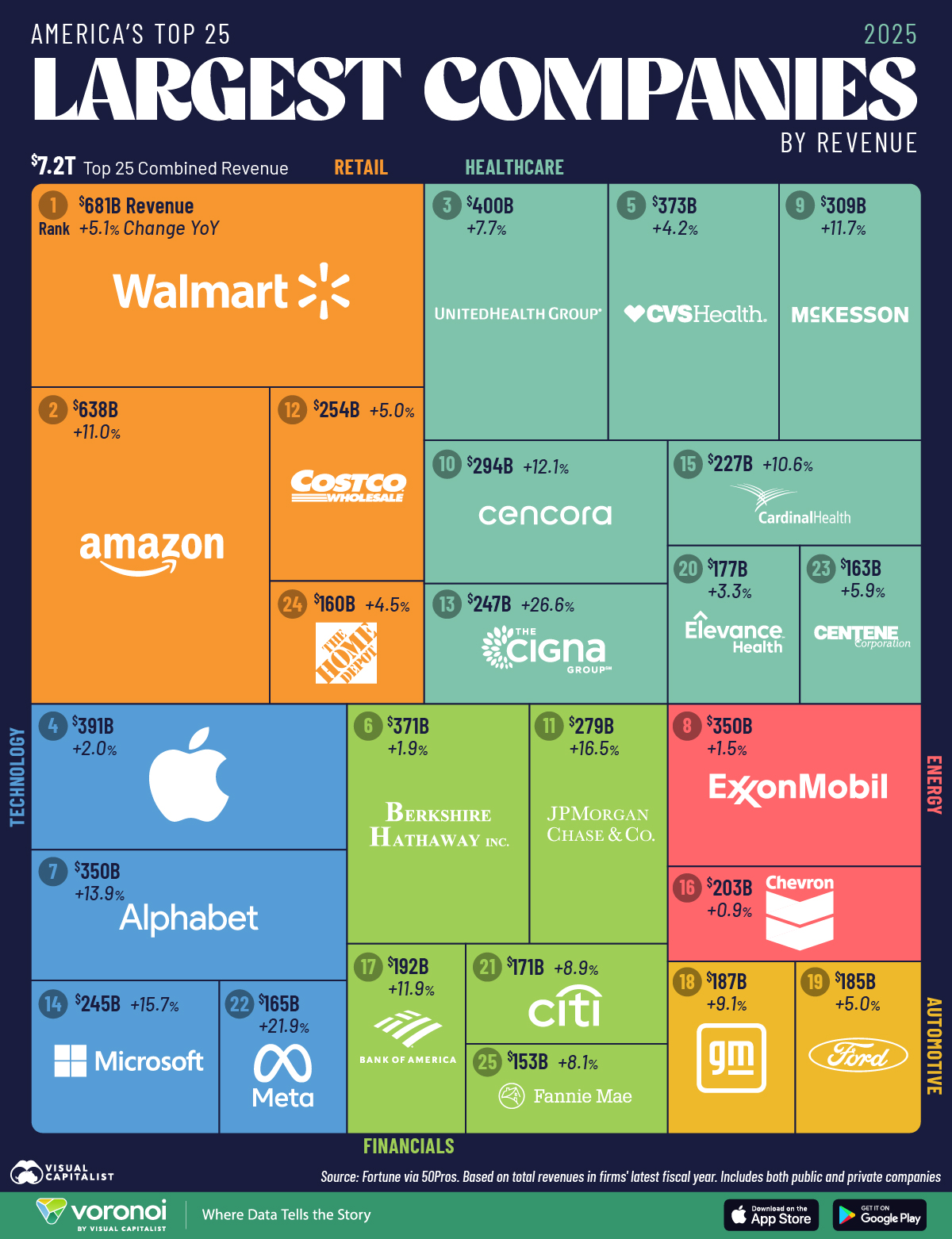
The mathematics of African American household debt present a stark choice: either eliminate $480 billion in consumer credit or add $1.5 trillion in mortgage debt. These are the pathways to achieving the 3:1 mortgage-to-consumer-credit ratio that European, Hispanic, and other American households maintain as a baseline of financial health. The first option requires African Americans to reduce consumer borrowing by 65% while maintaining current mortgage levels. The second demands increasing mortgage debt by 185% from $780 billion to $2.22 trillion while holding consumer credit constant. Neither path is realistic in isolation, yet both illuminate the extraordinary structural challenge facing Black households attempting to build wealth in an economy designed to extract it.
The current debt profile of $780 billion in mortgages against $740 billion in consumer credit represents an almost perfect inversion of healthy household finance. To understand the magnitude of correction required, consider what a 3:1 ratio would mean in practice. If African American households maintained their current $780 billion in mortgage debt, consumer credit would need to fall to $260 billion, a reduction of $480 billion. Alternatively, if consumer credit remained at $740 billion, mortgage debt would need to rise to $2.22 trillion, an increase of $1.44 trillion. The symmetry of these impossible requirements reveals how far African American household finance has diverged from sustainable wealth-building patterns.
The consumer credit reduction scenario appears superficially more achievable. After all, paying down debt requires discipline and sacrifice rather than access to new credit markets. Yet the practical barriers are immense. Consumer credit serves multiple functions in African American households, not all of them discretionary. Medical debt, a significant component of consumer credit, reflects the reality that Black Americans face higher rates of chronic illness while having lower rates of health insurance coverage and higher out-of-pocket costs. Transportation debt, often in the form of auto loans that blur the line between consumer and secured credit, reflects the necessity of vehicle ownership in a nation with limited public transit and residential patterns shaped by decades of housing discrimination that placed Black communities far from employment centers.
Even the portion of consumer credit that finances consumption rather than necessity spending reflects structural constraints. When median Black household income remains roughly 60% of median white household income, and when emergency savings remain inadequate due to lower wealth accumulation, consumer credit becomes a volatility buffer—a way to smooth consumption when irregular expenses arise. The Federal Reserve’s Survey of Household Economics and Decisionmaking consistently shows that Black households are significantly more likely than white households to report that they could not cover a $400 emergency expense without borrowing or selling something. This is not improvidence; it is the predictable result of income and wealth gaps that leave no margin for error.
Reducing consumer credit by $480 billion would require African American households to collectively pay down debt at a rate of approximately $40 billion per month for a year, or $3.3 billion per month for twelve years, assuming no new consumer debt accumulation. Given that African American households currently carry 15% of all U.S. consumer credit while representing 13% of the population, this would require Black households to dramatically outperform all other groups in debt reduction while maintaining living standards and weathering economic volatility without the credit cushion that has become structurally embedded in their financial lives.
The mortgage expansion scenario presents different but equally formidable challenges. Adding $1.44 trillion in mortgage debt would require African American homeownership to expand dramatically or existing homeowners to take on substantially larger mortgages. Current African American homeownership stands at approximately 45%, compared to 74% for white households. Yet even closing this gap entirely would be insufficient. To generate $1.44 trillion in new mortgage debt at the median Black home value of $242,600 (according to BlackDemographics.com analysis of Census data), African American homeownership would need to reach 87%—a rate no demographic group in American history has ever achieved. For context, white homeownership peaks at 74%, Asian American homeownership reaches approximately 63%, and Hispanic homeownership stands around 51%. The mortgage expansion path requires Black households to exceed the performance of every other demographic group by more than 13 percentage points while navigating credit markets that systematically disadvantage them.
More realistic would be existing homeowners trading up to more expensive properties or extracting equity through cash-out refinancing. Yet here too the barriers are substantial. The 2025 LendingTree analysis showing 19% denial rates for Black mortgage applicants reveals that even creditworthy Black borrowers face systematic disadvantages in accessing mortgage credit. For those who do gain approval, interest rate disparities mean that Black borrowers pay higher costs for the same debt, reducing the wealth-building potential of homeownership while increasing monthly payment burdens.
There is also the question of whether massive mortgage expansion would even be desirable. The 2008 financial crisis demonstrated the dangers of over-leveraging households on housing debt. While the crisis hit all communities, African American households suffered disproportionate wealth destruction, losing 53% of their wealth between 2005 and 2009 compared to 16% for white households. This reflected both predatory lending practices that steered Black borrowers toward subprime mortgages and the concentration of Black wealth in housing, which meant that home price declines destroyed a larger share of Black household balance sheets. Adding $1.44 trillion in mortgage debt without addressing underlying income inequality, employment instability, and institutional weakness would simply create a larger foundation upon which the next crisis could inflict even greater damage.
Nor would shifting the focus toward investment properties rather than primary residences solve this vulnerability. While rental properties offer income generation and different tax treatment, they would further concentrate African American wealth in real estate potentially pushing the share from the current 60% of assets concentrated in real estate and retirement accounts to 75% or higher in property holdings alone. When real estate markets crash, they crash comprehensively, taking both owner-occupied homes and rental properties down together. The 2008 crisis demonstrated this brutally: Black investors who had built portfolios of rental properties lost everything when tenants couldn’t pay rent during the recession, forcing investors to carry multiple mortgages they couldn’t service, leading to cascading foreclosures across their entire property holdings. Investment real estate offers no escape from concentration risk when households lack the liquid assets, diversified portfolios, and institutional support systems necessary to weather market downturns. With African American households holding just $330 billion in corporate equities and mutual funds—a mere 4.7% of their assets—there simply isn’t enough non-real-estate wealth to cushion the impact of property market volatility, regardless of whether the properties are owner-occupied or investment holdings.
The geographic dimension of mortgage expansion presents additional complications. African American homeownership is concentrated in markets where home values have historically appreciated more slowly than in majority-white submarkets. A recent Redfin analysis found that homes in majority-Black neighborhoods appreciated 45% less than homes in majority-white neighborhoods over a fifteen-year period, even after controlling for initial home values and location. This means that even substantial increases in mortgage debt may not generate proportional wealth accumulation if the underlying properties do not appreciate at competitive rates. The legacy of redlining, racial zoning, and exclusionary land use policies has created a geography of disadvantage where Black homeownership builds less wealth per dollar of debt than white homeownership.
The institutional barriers to either path are equally daunting. African American-owned banks hold just $6.4 billion in assets, while African American credit unions hold $8.2 billion. Together, these institutions control less than $15 billion in lending capacity. If these institutions were to facilitate a $480 billion reduction in consumer credit by offering debt consolidation loans at lower rates, they would need to increase their asset base by more than thirtyfold. If they were to finance a $1.44 trillion increase in mortgage debt, they would need to grow nearly hundredfold. Neither is feasible within any realistic timeframe, meaning that any significant shift in African American debt composition must flow through institutions owned by other communities, the same institutions whose discriminatory practices and wealth extraction mechanisms created the current imbalance.
There are no African American-owned credit card companies, no Black-controlled mortgage servicers of scale, no African American commercial banks with the balance sheet capacity to originate billions in mortgage debt. This institutional void means that even if African American households collectively decided to restructure their debt profiles, they would lack the institutional infrastructure to execute that restructuring on their own terms. Every loan refinanced, every new mortgage originated, every credit card balance transferred would enrich institutions outside the community, perpetuating the extraction cycle even as households attempted to escape it.
The policy environment offers little assistance. The Federal Housing Administration, which once provided a pathway to homeownership for millions of Americans, has become a more expensive option than conventional mortgages for many borrowers, with mortgage insurance premiums that never fall away. Fannie Mae and Freddie Mac, the government-sponsored enterprises that dominate the mortgage market, have made reforms to reduce racial disparities in underwriting, but these changes have been modest and face political resistance. Consumer Financial Protection Bureau regulations that might limit predatory lending face uncertain enforcement in a political environment hostile to financial regulation.
State and local down payment assistance programs exist but remain underfunded relative to need. Employer-assisted housing programs, which some corporations have established to help employees become homeowners, rarely reach the Black workers who need them most, both because African Americans are underrepresented in the professional class jobs these programs typically target and because the programs often require employment tenure that Black workers, facing higher job instability, are less likely to achieve.
The theoretical third path—simultaneous reduction in consumer credit and expansion of mortgage debt—might seem to offer a middle ground. If African American households could reduce consumer credit by $240 billion while increasing mortgage debt by $720 billion, the 3:1 ratio could be achieved through a more balanced adjustment. Yet this scenario simply combines the barriers of both approaches: it requires access to mortgage credit that discrimination constrains, while also requiring debt paydown that income and wealth gaps make difficult, all while navigating through institutions that lack alignment with Black community interests.
What makes the entire framing particularly troubling is that it treats symptoms rather than causes. The 3:1 ratio that other communities achieve is not the result of superior financial planning or cultural advantage. It reflects higher incomes that reduce the need for consumer credit to smooth consumption, greater wealth that provides emergency buffers without borrowing, better access to mortgage credit at favorable terms, stronger financial institutions serving their communities, and residential patterns that allow homeownership to build wealth efficiently. African American households face the inverse of each advantage: lower incomes, less wealth, worse credit access, weaker institutions, and housing markets structured to extract rather than build wealth.
Pursuing a 3:1 ratio without addressing these structural factors would be like treating a fever without addressing the underlying infection. The ratio is a symptom of deeper pathologies: systematic wage discrimination that has suppressed Black income for generations, wealth destruction through urban renewal and highway construction that demolished Black business districts, redlining and racial covenants that prevented Black families from accessing appreciating housing markets during the great postwar suburban expansion, mass incarceration that removed millions of Black men from the labor force and branded millions more as essentially unemployable, and the steady erosion of the institutional infrastructure that might have provided some counterweight to these forces.
The data from HBCU Money’s 2024 African American Annual Wealth Report shows African American households with $7.1 trillion in assets and $1.55 trillion in liabilities, yielding approximately $5.6 trillion in net wealth. Yet this wealth is overwhelmingly concentrated in illiquid assets, real estate and retirement accounts comprising nearly 60% of holdings. The modest $330 billion in corporate equities and mutual fund shares represents just 0.7% of total U.S. household equity holdings. This concentration in illiquid assets means that even households with substantial paper wealth lack the liquidity to manage volatility without consumer credit, while also lacking the income-producing assets that might reduce dependence on labor income.
The comparison with other minority communities is instructive. According to the FDIC’s Minority Depository Institution program, Asian American banks control $174 billion in assets, Hispanic American banks hold $138 billion, while African American banks manage just $6.4 billion. These disparities reflect different histories of exclusion and different patterns of institutional development, but they also reveal possibilities. Hispanic and Asian American communities have managed to build and sustain financial institutions at scales that enable meaningful intermediation of community capital. African American communities have not, and the debt crisis is one manifestation of this institutional failure.
The question is not really whether African American households should reduce consumer credit by $480 billion or increase mortgage debt by $1.44 trillion. Neither is achievable through household-level decisions alone, and both would leave unchanged the extraction mechanisms and institutional weaknesses that created the crisis. The question is whether the structural conditions that make the current debt profile inevitable like income inequality, wealth gaps, discriminatory credit markets, institutional underdevelopment can be addressed at a scale and pace sufficient to prevent the debt trap from closing entirely.
The urgency is real. Consumer credit growing at 10.4% annually while mortgage debt grows at 4.0% and assets appreciate even more slowly suggests an accelerating divergence. Each year, the gap widens. Each year, the extraction intensifies. Each year, the institutional capacity to respond weakens as Black-owned banks close and credit unions remain trapped at subscale. The mathematics of debt restructuring, stark as they are, pale beside the mathematics of compounding disadvantage where each year’s extraction reduces the capacity to resist next year’s, creating a downward spiral from which escape becomes progressively more difficult.
The $480 billion or $1.5 trillion question is not really about debt reduction or mortgage expansion. It is about whether a community can restructure its household finances while lacking institutional control over the credit markets it must navigate, while facing discrimination at every point of access, while generating wealth that flows immediately out of the community through interest payments, fees, and rent extraction. The answer, based on current trajectories, appears to be no. The alternative is building the institutional infrastructure, addressing the income and wealth gaps, reforming the credit markets that requires a scale of intervention that African America’s current political and economic institutional conditions make unlikely. And so the debt trap closes, slowly but inexorably, converting nominal wealth gains into real wealth extraction, one interest payment at a time.
Disclaimer: This article was assisted by ClaudeAI.
“Power grows when it circulates. If only one HBCU rises, none of us truly rise.”
MacKenzie Scott’s philanthropy has reshaped the HBCU landscape in ways that few could have imagined a decade ago. When her unrestricted gifts began landing across the sector, they offered something rare in Black institutional life: immediate liquidity, strategic freedom, and the assumption that HBCUs knew best how to use the capital given to them. Institutions like Prairie View A&M, Tuskegee, Winston-Salem State, Spelman, Morgan State, and others seized this moment to strengthen balance sheets, expand programs, retire debt, and set in motion long-term visions often delayed by years of underfunding.
But while headlines celebrated these historic gifts, another truth ran quietly beneath the surface many of the smallest, oldest, and most financially fragile HBCUs received nothing. Texas College, Voorhees, Morris, short-funded religiously affiliated colleges, and two-year HBCUs were notably absent from the list. Their exclusion was not due to a lack of mission, quality, or need. It was due to visibility, a structural inequality baked into the philanthropic landscape.
Large and mid-sized HBCUs possess communications offices, audited financial statements, national reputations, and alumni networks large enough to keep their names in circulation. Small HBCUs often have one person doing the work of an entire department, no national brand presence, and no full-time staff dedicated to donor engagement. Philanthropy at scale tends to flow to institutions already “discoverable,” which means the colleges that need the money most are often the least visible to donors like Scott. This is not a critique of her giving; she has done more for HBCUs than any private donor in a generation. Where the African American donors of consequence is a another article for another day. It is an indictment of a philanthropic system that confuses visibility with worthiness.
Unrestricted capital, however, changes power dynamics. When an HBCU receives $20 million, $40 million, or $50 million with no strings attached, it is receiving not just money but institutional autonomy. It is gaining the ability to build, to plan, to hire, to innovate, and to settle the long-deferred obligations that drain mission-driven organizations. This autonomy carries with it an important question: what responsibility does an HBCU have to the larger ecosystem when it receives this kind of power?
HBCUs often describe themselves as part of a shared lineage, a collective built from necessity and sustained by interdependence. If that is true, then institutions that receive transformative gifts have a responsibility to circulate a portion of that capital to the HBCUs that remain structurally invisible. This is not a matter of charity; it is a matter of ecosystem logic. A rising tide only lifts all boats if every institution has a boat capable of floating.
Even a small redistribution—2 to 5 percent of unrestricted gifts—would represent a meaningful shift. A $50 million gift becomes a $1–2.5 million contribution to a collective pool. A $20 million gift becomes $400,000–$1 million. A $5 million gift becomes $100,000–$250,000. Spread across the dozens of HBCUs that received Scott’s funds, such a strategy could generate $40–60 million in shared capital almost immediately. For a small HBCU with a $12 million budget, even a $500,000 infusion can stabilize operations, hire essential staff, or stave off accreditation risks. And for two-year HBCUs—critical institutions that often serve first-generation and working-class students—$250,000 can transform workforce programs or upgrade classroom technology.
When unrestricted money flows into the ecosystem, it should not be seen as belonging solely to the institution receiving it. It should be viewed as a rare chance to strengthen the entire system that sustains Black educational capacity. That means revisiting the historic practices of resource sharing that once defined HBCUs. There was a time when faculty were exchanged, when larger institutions lent administrators to smaller ones, and when collective survival was at the center of institutional strategy. Financial scarcity eroded much of that ethos over time; unrestricted capital can revive it.
The need for this kind of intra-HBCU investment becomes even more urgent when we consider how philanthropy shapes public perception. When a small HBCU faces financial distress, politicians and media often use its weakness as a reason to question the entire sector. But when a small HBCU strengthens, expands, and stabilizes, it lifts the credibility of the collective. The fate of one HBCU inevitably influences the political and philanthropic fortunes of the others. Strengthening the weakest institutions is not optional it is a strategic imperative for the strongest ones.
Shared capital also opens the door to new structures that benefit the entire ecosystem. Larger HBCUs could help create a visibility accelerator that provides grant-writing support, marketing expertise, budgeting assistance, and donor engagement tools for smaller institutions. They could establish a joint endowment fund where smaller HBCUs gain access to investment managers they could never otherwise afford. They could create emergency liquidity pools to help institutions weather short-term cash shortages that often cascade into long-term crises. They could co-sponsor research initiatives, faculty exchanges, and new academic programs at institutions that have the vision but lack the staff or funding to execute.
These are not theoretical ideas; they are practices used by well-resourced universities and nonprofit networks across the country. Major universities routinely fund pipeline schools, partner institutions, and community colleges. Corporations build up their suppliers. Regional governments pool funding to strengthen smaller municipalities. In almost every sector except the HBCU sector, power is used to build the ecosystem, not just the institution.
One of the most overlooked consequences of Scott’s gifts is the cultural message they send: large HBCUs are now in a position to move beyond survival mode and into builder mode. They can start thinking not just about their own campuses but about the health of the entire HBCU network. They have the resources to help smaller institutions become discoverable to future donors, to strengthen donor reporting infrastructure, to modernize back offices, and to raise their visibility in national conversations.
Redistribution is not about guilt. It is not about moral obligation. It is about strategic logic. Large HBCUs cannot thrive in a sector where small HBCUs collapse. For the ecosystem to have political leverage, credibility in national policy debates, and a future pipeline of Black scholars and professionals, the entire network must be strong. When an HBCU closes or falters, opponents of Black institutional development use that failure as proof of irrelevance. When an HBCU grows even a small one it becomes a success story that benefits the whole landscape.
The Scott gifts represent a once-in-a-generation financial turning point, but they are only a starting point. If HBCUs treat them as isolated blessings, the impact will be uneven and short-lived. If they treat them as seed capital for an ecosystem-wide transformation, the impact could reshape Black educational power for decades. Large HBCUs must decide whether they will be institutions that simply grow or institutions that help the entire sector evolve.
Smaller HBCUs cannot increase visibility alone. They cannot hire full development teams or produce 50-page donor reports without capital. They cannot expand new programs without bridge funding. They cannot modernize their infrastructure without partners. But the HBCUs that did receive unrestricted capital can change the landscape for them and by doing so, they strengthen the entire ecosystem.
This moment is not just about money. It is about whether HBCUs will use new wealth to reproduce old hierarchies or to build new pathways for collective power. In a philanthropic world that rewards visibility, the institutions that already stand in the light now have the responsibility and the means to illuminate the rest.
The measure of true power within the HBCU ecosystem is not what one institution accumulates. It is what the ecosystem can create together what none of its institutions could build alone. The future of HBCU philanthropy will depend on whether those blessed with unrestricted gifts choose to expand their own shadows or choose instead to cast light.